MiVoice MX-ONE Virtualization
MiVoice MX-ONE is composed mainly by a piece of software called Service Node that is responsible for call control and a gateway that is responsible by media transcoding. The gateways can be software only called Media Server or a dedicated hardware/software called MGU – Media Gateway Unit.
MX-ONE Service Node software as well as Media Server was originally designed to run on top of a standard physical server (traditional x86 architecture), meaning server hardware was dedicated to each server in a MX-ONE.
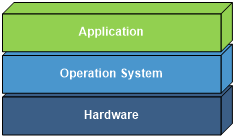
More and more Virtualization is part of the companies ITs and since MX-ONE 5.0 Mitel has validated MX-ONE software to run on top of a virtualized environment.
With the introduction of MiVoice MX-ONE 7.x, the MX-ONE main components Service Node, Database, Management system (Provisioning Manager) well as Media Server software has been re-validated in a virtualized environment, where the physical server hardware can be shared between several Service Node call managers.
The Database, Management system and Media Server was validated in a virtualized environment being co-located in the same virtual machine as MX-ONE Service Node and in standalone virtual machine.
In a Virtualization environment an abstraction layer, called a hypervisor, is installed between the physical hardware (host server/machine) and the operating system (guest machine). This abstraction layer allows several guest machines to co-exist on the same physical hardware to share resources like memory, CPU, etc. These guest machines are commonly referred to as Virtual Machines (VM).
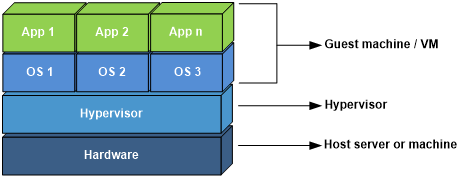
This means that multiple MX-ONE Service Node call managers, Database servers, Media Server, applications or guest machines can reside in the same physical host. The consolidation of server hardware through Virtualization reduces the server footprint offering lower power consumption and cooling requirements as well as decreased physical space requirements. Virtualization also offers the possibility to take advantage of high availability options that can provide increased resiliency for real time applications, such as MX-ONE.
- VMware software as a part of its Virtualization solution. Mitel has verified MX-ONE 7.x running as virtual machines in a VMware 6.5 or later infrastructure.
- Microsoft Hyper-V support based on Windows Server 2022 and 2019 as part of its Virtualization solution. Mitel has verified MX-ONE 7.1, and later, running as virtual machines in a Windows Server 2022 and 2019 hypervisor infrastructure.
- KVM virtual machine based on SUSE Linux Enterprise Server (SLES) 12 SP5 or later.
- KVM virtual machine based on Red Hat Enterprise Linux 7.6 or later.