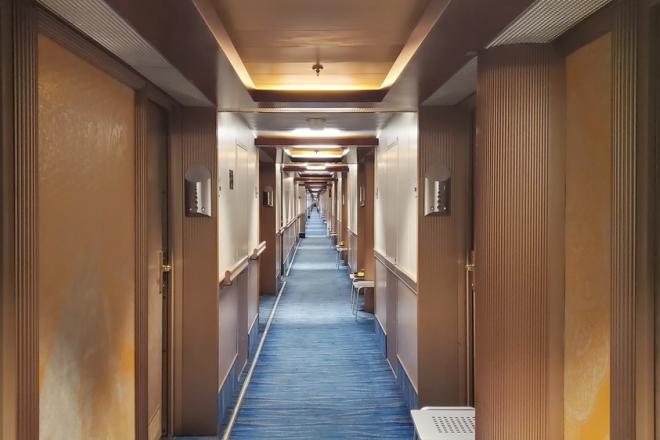
These days, the headline on every cruise ship is connectivity: fast satellite internet, ship-wide Wi-Fi, guests streaming from the middle of the ocean. The technology has come further in three years than in the previous twenty, and it shows.
Connectivity does matter, and remains a critical focus for Mitel. But when a guest actually needs assistance or ship services, what do they reach for?
More often than you'd think, it's the small phone on the bedside table.
The device that never makes excuses
In an age of connectivity, it's easy to question whether cabin phones still belong on modern cruise ships. But consider what happens to a personal mobile phone at sea.
It gets set to airplane mode to dodge roaming fees. It dies at 2 a.m. It gets left two decks up in a jacket pocket. Every one of those is a normal occurrence on a normal sailing, and each one leaves a guest holding the least dependable device in the room at the moment they need help most.
The fixed phone doesn't suffer the same limitations. It's always powered. It's always in the same spot. And it connects straight into the ship's own communications platform, not the open internet. Lift the handset and the ship already knows which cabin is calling, before a word is spoken. In an accessible cabin during a medical emergency, that single fact is the difference between crew arriving at the right door and hunting for it.
That's reliability, and at sea reliability wins.
Big enough for the job, small enough for the cabin
But reliability alone isn't enough. A cabin phone also has to fit the realities of ship design: limited space, limited power outlets, and cabins that need to be configured consistently across an entire fleet.
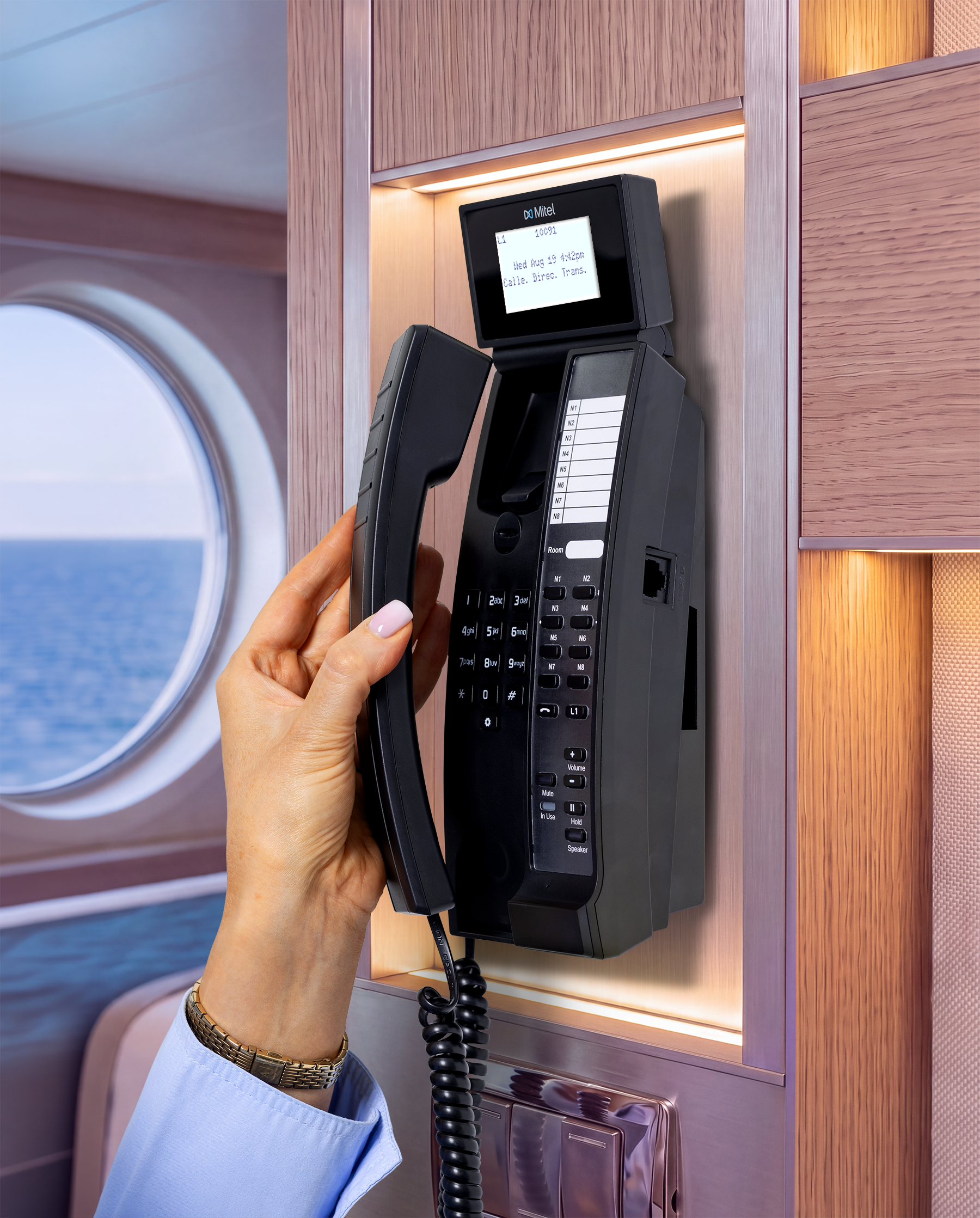
The 6903t was designed with those realities in mind. It fits where larger business phones don't, runs over the same Ethernet connection that carries the call, supports consistent room layouts across a fleet, and includes an antimicrobial surface treatment for high-turnover guest environments.
Cabin phones also simplify standardization across a fleet. Cruise operators work hard to create consistent guest experiences, whether a passenger is sailing on a ship's newest vessel or returning to a familiar route years later. Communications are part of that experience. When service numbers, emergency contacts, and room layouts remain consistent across cabins and across ships, guests spend less time figuring out how to get help and more time getting it.
Consistency matters for crew as well. Housekeeping, guest services, security, and medical teams often move between vessels throughout their careers. Familiar equipment and standardized configurations reduce training requirements and help staff respond confidently in situations where every second counts.
There's also a practical reality to life at sea. Unlike a hotel, a cruise ship is a self-contained environment. Guests cannot simply walk outside, call a local service provider, or rely on terrestrial networks when something goes wrong. Whether someone needs housekeeping, has misplaced a passport, or requires urgent medical attention, the communications systems on board have to work as expected every time.
More than a standalone phone
The cabin phone is only one endpoint in a broader communications system.
A guest may use it to contact reception, guest services, security, or the medical team, but the value comes from what happens after the call is placed. The same communications platform can route alerts, locate available staff, and connect the right people without relying on guests to explain where they are or who they need to reach.
In many deployments, emergency calls and alerts can be directed simultaneously to medical, security, and operational teams, helping crews respond more quickly and with better location information.
For guests, the experience remains simple: pick up the handset, press a button, and reach the right team. Behind that interaction is the communications infrastructure that helps coordinate staff and services across the ship.
That direct connection becomes particularly valuable during periods of network congestion. While guests may be using bandwidth-intensive applications across the ship, cabin phones remain dedicated communication endpoints designed to provide fast access to onboard services.
So the cabin phone isn't competing with a guest's smartphone or the ship's Wi-Fi. It simply provides guests with a reliable, direct connection to ship services when they need assistance.
Connectivity is only part of the guest experience
Fast internet has become an expected part of the cruise experience. Reliable access to ship services remains just as important.
When guests need medical assistance, security, housekeeping, or guest services, they need a communications device that is available, easy to find, and connected to ship operations.
That's why cabin phones continue to have a place on modern cruise ships.
The Mitel 6903t IP Phone was designed specifically for that environment and is available from August 2026. Connect with a Mitel representative to learn more.